If data is still collected by hand at your plant, consolidated in Excel at the end of a shift, or if failures are only discovered once the machine has already stopped, this article is for you. The IIoT (Industrial Internet of Things) has been promising to change how the industry makes decisions for years, and the reality is that this change is already happening. The question is no longer whether to connect, but when and how to do so without it becoming an 18-month project requiring a team of 10 engineers.
What exactly is IIoT?
IIoT, or the Industrial Internet of Things, is the extension of IoT (Internet of Things) to the industrial environment. It consists of connecting machines, sensors, controllers, and production systems to digital networks to capture, transmit, and analyze data continuously and automatically.
Unlike consumer IoT (smart thermostats, activity trackers), IIoT operates in demanding environments where reliability, security, and latency requirements are much stricter. We are talking about PLCs, industrial robots, energy meters, temperature and pressure sensors, frequency inverters… devices that already exist in most facilities but, in many cases, function as information islands without connecting to each other or to the company’s management systems.
Industrial data: the most underutilized resource in manufacturing
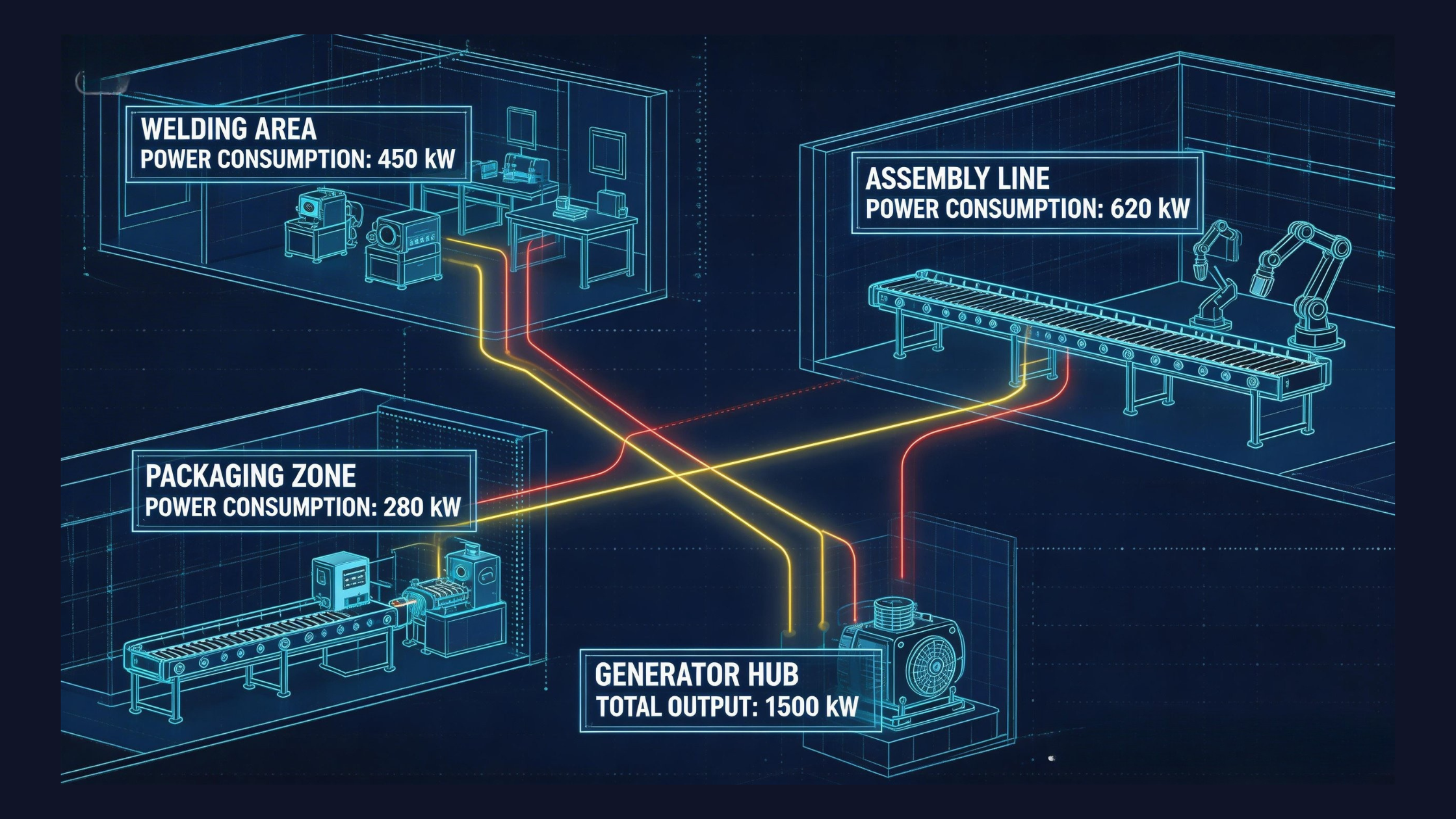
A modern production line generates thousands of variables every second: temperatures, pressures, speeds, electricity consumption, production counters, alarm statuses… Most of that information disappears without being recorded or, at best, remains trapped in the PLC or local SCADA, inaccessible to the management or maintenance team when they need it most.
IIoT changes this by connecting that data to the cloud, where it can be stored without limits, visualized on real-time dashboards, cross-referenced with other business indicators, and analyzed with Business Intelligence or Machine Learning tools.
The four pillars of IIoT
Connectivity
The first step is getting the devices to talk. The most widespread industrial protocols are Modbus TCP and OPC-UA, although MQTT, PROFINET, EtherNet/IP, and others also exist. An industrial gateway acts as a translator between the OT (Operational Technology) world and the IT world, collecting data from devices and sending it to the cloud in a secure and encrypted manner.
Cloud
The cloud is where data comes to life. Platforms like AWS or Azure offer managed services for time-series storage, real-time processing, alerts, and visualization. The complexity lies in correctly configuring that architecture, a task that traditionally required a specialized team.
Analytics and visualization
Unanalyzed data has no value. Real-time dashboards allow the production team to see the plant’s status at any time and from any device. Business Intelligence reports convert that data into actionable KPIs: OEE, consumption per unit produced, cycle times, availability per machine…
Action
The ultimate goal of IIoT is not to have pretty data on a screen, but to act on it. Automatic alerts notify the operator or maintenance manager when a parameter falls out of range. Predictive maintenance detects degradation patterns before a failure occurs. AI can optimize process parameters in real time.
How much does it cost to implement IIoT?
This is the question that most hinders adoption. The reality is that the cost and implementation time have dropped radically in recent years thanks to no-code platforms like coppioT, which eliminate the need to program cloud architectures from scratch or hire highly specialized technical profiles.
The investment depends on the number of devices to be connected, the cloud services activated, and the level of analytics required. But the relevant question is not how much it costs to implement it, but how much it costs not to: lost production due to unplanned downtime, unoptimized energy consumption, quality without traceability.
IIoT in practice: real use cases
- Monitoring energy consumption per machine to identify inefficiencies and reduce the electricity bill.
- Temperature and humidity control in processes that require stable conditions (food, pharmacy, electronics).
- Real-time OEE (Overall Equipment Effectiveness) tracking to detect micro-stops and unplanned downtime.
- Predictive maintenance based on vibration, temperature, or current to anticipate failures in motors, compressors, or bearings.
- Product traceability throughout the production line to ensure quality and comply with regulatory requirements.
coppioT: IIoT without complications
coppioT is the platform that does all this without the need for programming. Connect your devices to the cloud, activate the services you need, and start seeing your data in dashboards, reports, and alerts. Without hiring cloud architects, without months of integration.
Do you want to see how it works in your environment? Request a demo and we will show you what coppioT can do for your plant.