
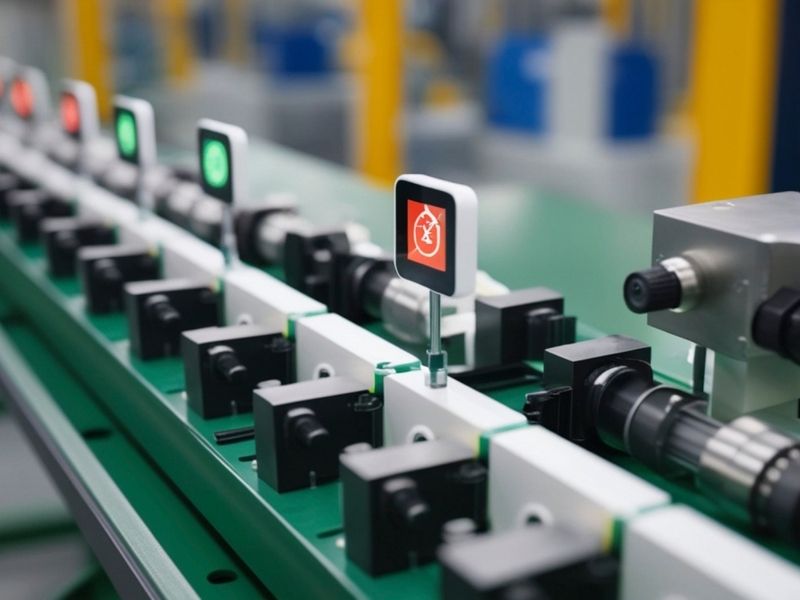
How to connect legacy machinery to the cloud without changing anything on the shop floor
“We have machinery that has been running for 25 years without issues. We cannot replace it or stop it to install anything.”
We hear this in almost every conversation with plant managers. And the answer always surprises them: there is no need to replace it, stop it, or touch its control logic to start obtaining data from it.
The replacement myth
There is widespread confusion between digitising and renewing. Industrial digitisation does not require replacing a 2003 CNC milling machine that produces perfect parts, nor a compressor that has delivered two decades of impeccable service. Digitisation adds a layer of observability on top of what already works.
Most industrial machines, even the oldest ones, have some way of exposing data: a PLC with a communications port, Modbus registers, analogue electrical signals (4–20 mA, 0–10 V), or simply status contacts (run/stop, alarm, cycle complete). That is where integration begins.
The three integration paths for legacy machines
Path 1 — Existing communications protocol
If the machine has a PLC with an Ethernet port and Modbus TCP support, integration is straightforward. An IIoT gateway connects to the plant network, reads the PLC registers, and sends them to the cloud. Commissioning time: hours.
If the PLC is older and only has RS-485 (Modbus RTU), an RS-485/Ethernet adapter is added. The process does not change.
Path 2 — Analogue and digital signals
When no communications protocol is available, the electrical signal is instrumented. Current sensors (Hall-effect clamps) measure consumption without opening the electrical cabinet. Digital inputs capture the states of auxiliary contacts. Transducers convert analogue signals into a digital format compatible with the gateway.
Path 3 — Non-invasive external sensors
For machines where there is no accessible electrical signal, external sensors are the solution: wireless accelerometers attached to the motor frame, thermal cameras, ultrasonic flow meters installed on the outside of the pipe without cutting into the fluid.
What about OT security?
Connecting a machine to the internet raises legitimate cybersecurity concerns, especially in OT environments where security has historically been based on physical isolation.
Current best practices address this with a unidirectional architecture: the gateway sends data to the cloud but does not receive instructions back. The machine is not exposed to any inbound connection. Data traffic is encrypted (TLS/SSL), and the gateway operates in a network segment segregated from the PLC. coppioT has been designed with this philosophy from its architecture.
How long it really takes
Projects that five years ago required months of integration are now completed in days. The difference is made by no-code platforms: in coppioT, configuring a new device is done through a visual interface, without code.
- Day 1: gateway installation, connection to the plant network, device configuration.
- Days 2–3: data flow validation, adjustment of sampling frequencies.
- Week 2: first operational dashboards and alert configuration.
The business case
Connecting legacy machinery does not have the glamour of buying new equipment, but it delivers a much faster return. You are extracting value from assets that have already been depreciated, without additional capex on production equipment. It is smart digitisation: making the most of what you already have before investing in what you do not.
Do you have legacy machinery you want to connect? Tell us about your case →